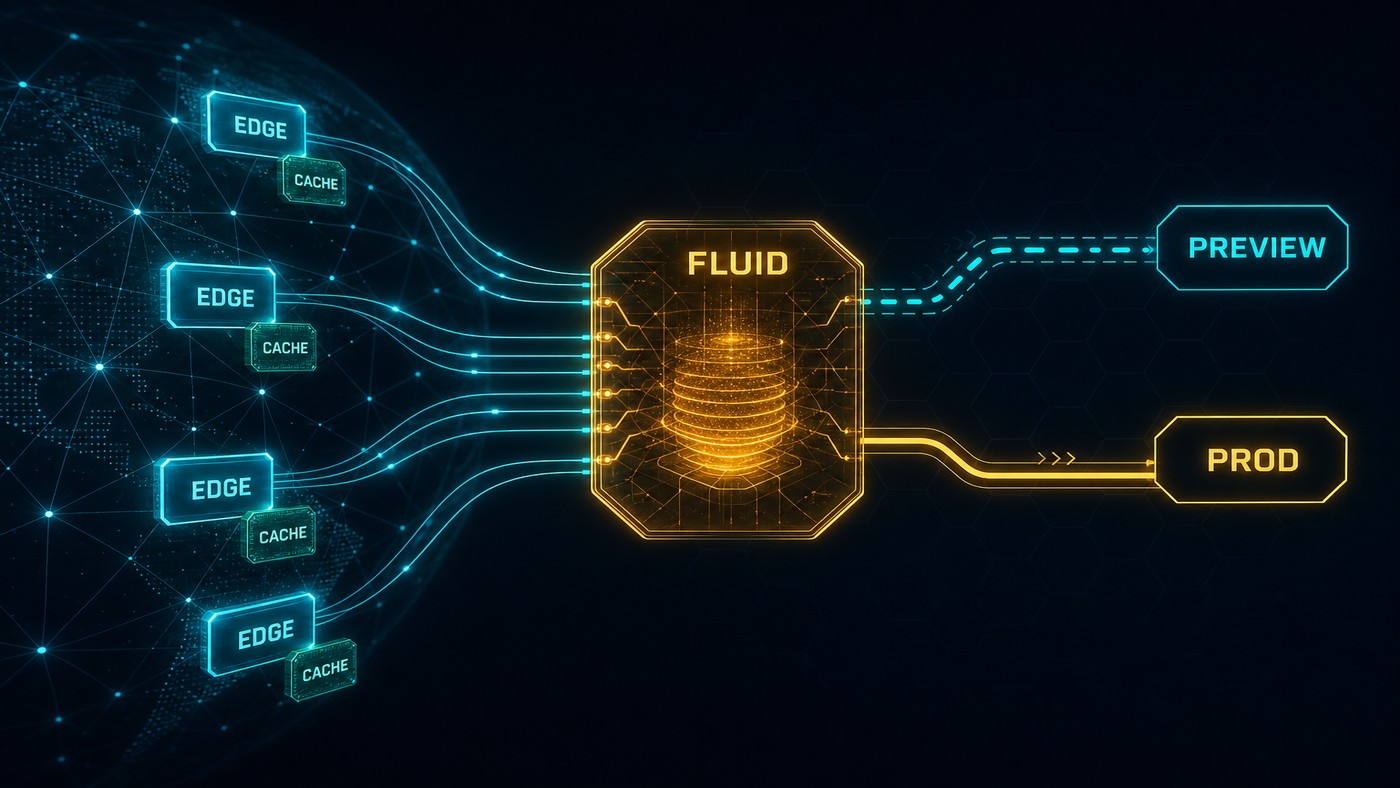
Vercel Architecture: Fluid Compute, Request Lifecycle, and the Deployment Pipeline
CDN topology, Fluid compute concurrency model, request routing, build pipeline, environment isolation, function duration limits, and where cost accumulates.

Gemini API Architecture: Interactions, Live, Batch, and Media
Model family, generateContent vs streaming, tool use loops, File API for large media, Imagen 4 image generation, rate tier limits, and where cost accumulates.
Grok Bot Architecture: Shared Cloud Computer, Named Teammates, and Approval Boundaries
Official xAI docs only. A Bot is one persistent named teammate. All Bots share one user-scoped cloud computer. Connectors versus computer use, approvals, skills, and routines.

Application Encryption Architecture: At Rest, In Transit, and Key Hierarchy
AES-256-GCM, envelope keys, Argon2id, and TLS. The four encryption decisions every backend makes and how IV reuse, unauthenticated modes, and timing leaks break them.

M-Pesa Daraja Architecture: STK Push, Callbacks, and Reconciliation
OAuth token lifecycle, STK Push async flow, callback race conditions and idempotency, C2B vs B2C transaction types, security model without webhook signatures, and daily reconciliation.

PWA Update Architecture
Waiting workers, no-store version probes, Chromium-only install prompts, and Isolated Web Apps as a signed package, not a PWA flag.

WhatsApp Business Platform Architecture
24-hour session window, three-category templates, queue-first webhooks, WhatsApp Flows, and July 2025 per-message pricing.
Anthropic Claude Architecture
Messages API internals, client-server tool loops, prompt caching economics, model family routing, and the Managed Agents stack.
Neon Storage-Compute Split
Query engine on a copy-on-write object store: LSN branching, scale-to-zero, PgBouncer, serverless driver, read replicas.
Cloudflare R2 Object Storage: Zero Egress, Signed Access, and Workers Bindings
Pricing model with Class A/B operations, presigned URL flows for private media, Workers binding pattern, CORS for browser uploads, and S3 compatibility gaps.
Cloudflare Edge Architecture: Workers, Durable Objects, and Binding Topology
V8 isolate model, binding graph, Durable Objects for stateful coordination, storage tradeoffs across KV/D1/R2/DO, Smart Placement, and cost reality.
Clerk Auth Architecture: Sessions, Organizations, and Middleware Gates
Session tokens, clerkMiddleware request interception, server-side auth helpers, Organizations multi-tenancy, and webhook sync for Next.js App Router apps.
Caching Architecture Across CDN, Edge, and Application Layers
Five caching layers, one request. HTTP Cache-Control headers, Next.js data cache, Vercel CDN, and Upstash Redis: where each layer helps and where each one bites.
Observability Architecture
Logs, metrics, and traces as one control plane. OpenTelemetry signals, W3C trace context, cardinality rules, SLI/SLO burn alerts, and redaction at emit time.
Event and Queue Architecture
At-least-once delivery, the transactional outbox, consumer idempotency, poison messages, CloudEvents envelopes, and lag as a first-class SLO.
HTTP API Architecture
RFC 9110 methods, status classes, idempotency keys, problem details, versioning, cursor pagination, and the Cache-Control rules that make a public API.

DNS and TLS Architecture
Recursive resolution, DNSSEC, DoT/DoH, the TLS 1.3 handshake, certificate automation, and the failure modes that take production down while every pod stays green.

AI Agent Runtime Architecture
ReAct at the protocol level, client vs server tools, four memory layers, ToolLoopAgent vs HarnessAgent, loop control, guardrails, and real cost.
CI/CD Pipeline Architecture with GitHub Actions
Event triggers, workflow orchestration, runner infrastructure, secrets management, and advanced deployment patterns for production CI/CD pipelines.

The Database Deep Dive: Neon vs Cloudflare
Serverless Postgres vs Cloudflare’s data platform — architecture, storage, functions, and when to pick each plane for your stack.
PWA Deep Dive: Progressive Web App Architecture
Service workers, caching strategies, installability, and PWA vs native tradeoffs for production web apps.
Neon Serverless Postgres Architecture
DeepSystems No. 001 — Safekeepers, Pageserver, branching, scale-to-zero, autoscaling, and connection architecture for serverless Postgres (interactive).
Machine Learning: The Complete Architecture
DeepDeepest No. 003 — foundations, taxonomy, neural nets, training lifecycle, production serving, agent tooling, and the full ML stack.
The Internet and Networks Architecture
From physical signals to encrypted HTTPS packets. Firewalls, DNS resolution, TLS handshakes, IP addressing, BGP routing, network adapters, and the full packet journey traced end to end.
OpenClaw Architecture Deep Dive
Inside the open-source, locally-hosted AI agent platform. Gateway control plane, ReAct agentic loop, context assembly, Skills system, memory architecture, tool execution engine, and security model.